Opportunity for long-term outsized returns
Coloured diamonds — and particularly Argyle pinks — continue to present an extraordinary opportunity for long-term capital growth. Unlike other asset classes, the fundamental supply and demand dynamics are exceptionally tight: supply is permanently shrinking while global demand is broadening.
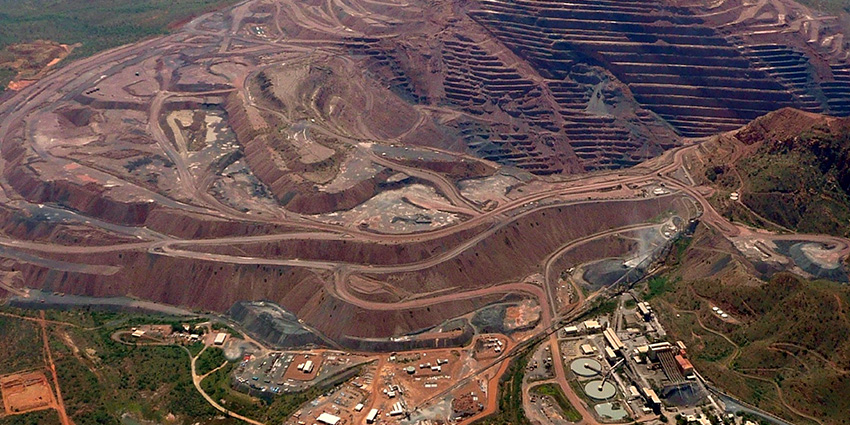
On the supply side, the Argyle mine in Western Australia, which once produced over 90% of the world’s pink diamonds, ceased production in 2020. No new major sources of pink or other rare coloured diamonds have been discovered, making existing stones increasingly finite. Each year that passes, fewer high-quality pinks come to market, reinforcing their scarcity.
On the demand side, interest continues to expand beyond traditional collectors and jewellers. Institutional investors, family offices, and private banks are now recommending coloured diamonds as part of diversified wealth strategies. Demand is especially strong in Asia and the Middle East, where a growing base of high-net-worth individuals view coloured diamonds as both a status symbol and a hard asset hedge against inflation and currency risk.
These twin forces — diminishing supply and expanding global appetite — have already driven record auction results and steadily rising private sale prices. With no new supply on the horizon, the imbalance is set to intensify, positioning rare coloured diamonds as one of the few luxury assets with the potential for long-term outsized returns.
Demand and Supply
The investment case for pink diamonds is rooted in one of the clearest supply-demand imbalances in the luxury asset world.
Supply:
-
The closure of the Argyle mine in late 2020 marked the end of the only consistent global source of pink diamonds, which once accounted for more than 90% of annual production.
-
Remaining mines in Africa, Canada, and Russia occasionally yield pinks, but production is sporadic, volumes are negligible, and few stones meet investment-grade standards.
-
With no new deposits discovered and exploration unlikely to replicate Argyle’s unique geology, global supply of natural pinks is effectively capped and diminishing year by year.
Demand:
-
Demand has broadened beyond jewellery collectors to include sophisticated investors, wealth managers, and family offices who see pink diamonds as an alternative asset with wealth-preserving characteristics.
-
Cultural drivers in Asia and the Middle East continue to expand the buyer base. In these markets, pinks are increasingly viewed as a generational wealth transfer asset — comparable to art or rare watches, but with even greater scarcity.
-
Growing awareness of Argyle provenance and limited supply has further elevated their desirability, with tender results and auction records underscoring the strength of demand even in softer economic conditions.
Market Balance:
-
Unlike many commodities where supply responds to price, the pink diamond market is structurally constrained: no matter how high prices rise, new production cannot meet demand.
-
This creates a self-reinforcing scarcity premium. As more investors and collectors enter the market, competition for the existing pool of stones intensifies, further underpinning long-term price appreciation.
In summary, pink diamonds are not simply rare — they are irreplaceable. With supply permanently fixed, the long-term trajectory remains firmly upward, even allowing for short- to medium-term cycles in the luxury goods market.
Crème de le crème
Pink diamonds stand out
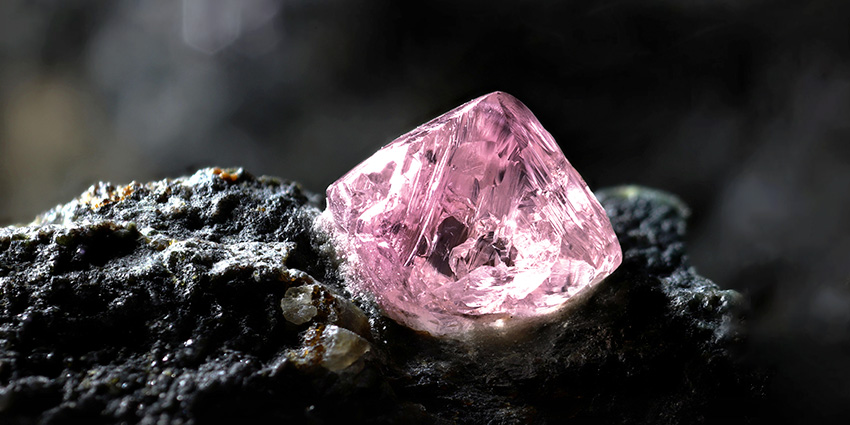
Rio Tinto’s Argyle mine produced 90% of the world’s pink diamonds when it was in operation, and held the monopoly in Champagne, Red and Violet Diamonds. Supply of pink diamonds is limited to a few handfuls of new polished stones per year. To put in perspective, for every million carats of rough diamonds produced at the Argyle diamond mine, a mere one carat was suitable for sale.
Closure of the Argyle Mine
Rio Tinto’s announcement that the Argyle mine had ceased operations in November 2020 marked a historic turning point for the diamond industry. Argyle was the world’s only consistent source of pink diamonds, responsible for over 90% of global supply. Its closure has permanently altered the supply landscape.
To date, no viable new deposits have been discovered that could replace Argyle’s unique geology. Even in the unlikely event that a new mine were identified, the development timeline would stretch 10–15 years before commercial production could begin — and with no guarantee of yielding pink diamonds of comparable quality or quantity.
This reality positions existing Argyle pink diamonds as a finite, legacy asset class. With supply permanently capped and global demand continuing to expand, investors are now recognising Argyle pinks as a scarce and irreplaceable store of wealth. The closure has strengthened their investment case, creating significant potential for capital appreciation in the long term.
Learn more about the supply of pink diamonds from the Argyle mine